
Tree Uplighting: How to Highlight Trees With Outdoor Lights
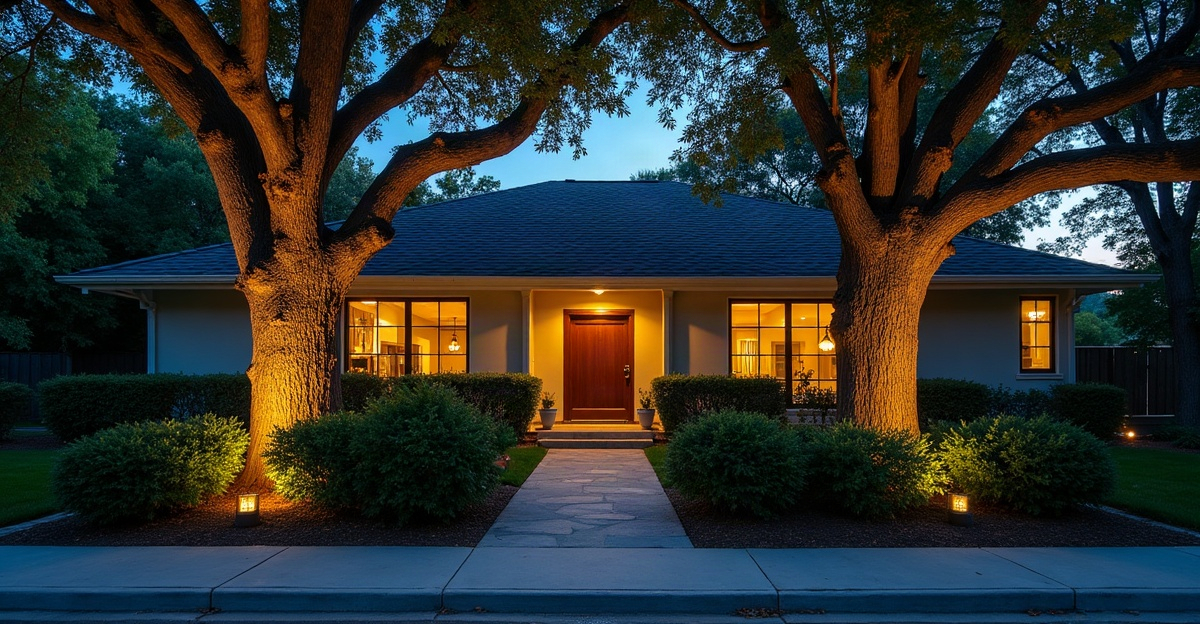
Tree uplighting reveals the trunk, bark, branches, and canopy details that add depth, curb appeal, and a refined nighttime look. We create site-specific plans with low-profile fixtures, balanced brightness, and clear viewing angles. This approach highlights selected trees and complements pathways, patios, and architecture throughout the year.
Key Takeaways
- Tree uplighting directs light upward to highlight a tree’s form, texture, and structure after dark.
- Selective lighting creates a clearer visual hierarchy than lighting every tree or landscape surface.
- Tree species, size, canopy density, seasonal shifts, and viewing distance guide fixture placement and beam spread.
- Low-profile fixtures and concealed wiring keep the landscape clean by day and limit glare at night.
- Balanced tree lighting adds depth to front entries, patios, large yards, and commercial entrances. It doesn’t replace dedicated security lighting.
What Tree Uplighting Can Do for Your Property
Tree uplighting directs outdoor light upward from the ground to emphasize a tree’s form, bark texture, trunk, branching, or canopy. This focused approach builds curb appeal and gives a property a clean, polished appearance after dark.
Well-planned landscape tree lighting adds visual depth to large or dark outdoor spaces. It can also make patios, entries, and entertaining areas feel warmer and more comfortable for evening use. Balanced exterior lighting helps a property feel more visible and welcoming, though it doesn’t prevent crime, guarantee safety, or replace dedicated security measures.
Tree accent lights work as a year-round design feature for homes and businesses across Northwest Arkansas, including Bentonville, Rogers, Fayetteville, Springdale, Joplin, and Neosho. From a compact ornamental near a front walk to mature trees framing a commercial entrance, lighting can give landscaping an intentional nighttime presence.
The Visual Effects That Make Trees Stand Out After Dark
Landscape tree lighting reveals details that disappear after sunset. A focused uplight can bring out deep bark texture and a dramatic trunk, while wider coverage can reveal the branching structure of deciduous trees. Evergreens often benefit from controlled illumination that adds depth to dense foliage without turning the planting area into a bright wall of light.
Trees also create strong focal points at entries, driveways, patios, commercial approaches, and landscape beds. Positioned behind a pathway or in front of an architectural surface, an illuminated tree adds layers that make the property feel dimensional rather than flat.
The strongest outdoor uplighting ideas don’t attempt to light every tree or surface. We create hierarchy. A few carefully selected trees can guide attention through the landscape, complement the home or building, and establish a refined nighttime atmosphere.
The desired effect may be subtle and low-profile or more dramatic. We base that decision on the tree’s shape, the primary viewing position, the architecture nearby, and the mood the property should convey after dark.
Outdoor Uplighting Ideas for Different Trees and Landscape Settings
Every tree responds differently to light. Tree height, canopy density, trunk structure, foliage type, seasonal changes, and viewing distance all affect the right placement and effect. There is no single fixture, brightness level, beam spread, or installation pattern that works across every landscape.
Front Approaches and Residential Landscapes
Ornamental trees near an entry can become a polished feature of the front approach. We can emphasize a distinctive trunk, compact canopy, or seasonal branching pattern to bring visual interest to the arrival experience.
Mature shade trees in front yards can give a dark elevation much-needed scale and depth. Their size calls for planning that considers how the canopy reads from the street, driveway, and front entry. A large tree may need selective illumination rather than broad, uniform light.
Multi-trunk trees offer a sculptural opportunity. We use placement that highlights the movement of the trunks and the open spaces between branches without creating distracting hot spots. Evergreen screening can also gain depth and presence, provided the lighting stays restrained enough to preserve texture.
Specimen trees beside patios or outdoor living spaces make an attractive backdrop for entertaining. They can visually extend the patio into the landscape and create a relaxed setting without drawing attention away from the people using the space.
Commercial Entries and Larger Properties
Trees framing a commercial entrance can help guide attention toward the building and create a more welcoming nighttime presence. The goal is clear visual direction, not excessive brightness.
Large properties benefit from depth across several areas of the site. A well-lit tree near an approach, a secondary tree farther into the landscape, and coordinated architectural or pathway lighting can create an intentional progression through the property. Seasonal foliage changes matter here as well. A deciduous canopy can look entirely different in summer and winter, so the design should remain attractive across the year.
How Professional Placement Creates a Clean, Balanced Effect
Professional tree uplighting starts with what viewers will see from the areas that matter most. We consider sightlines from the street, driveway, front entry, patio, pool area, or commercial approach before selecting placement.
A custom lighting design accounts for tree maturity, height, trunk structure, canopy density, foliage type, seasonal change, viewing distance, surrounding planting beds, architectural backdrop, desired mood, neighboring properties, and existing landscape features. Light direction, angle, distance from the tree, beam spread, and overlap all shape the final effect.
Concealment matters as much as illumination. We use unobtrusive, low-profile fixtures and thoughtful wire management so the landscape remains clean and polished during the day. Careful planning around roots, planting beds, irrigation, and existing features also helps minimize unnecessary disruption.
Tree lighting should support the architecture and the landscape as a whole. Our landscape lighting services bring pathways, focal trees, planting beds, patios, and exterior features into one coordinated plan instead of treating each area separately.
Common Tree Uplighting Mistakes to Avoid
Overlighting is the most common issue. Excessive brightness can create glare, flatten bark and foliage texture, affect neighboring properties, and reduce the polished look that tree uplighting should create. A quieter effect often delivers greater impact because the eye can still see shadow, dimension, and contrast.
Exposed fixtures create another problem. A visible light source can be uncomfortable to look at and disrupt the view from a patio, walkway, driveway, or street. Thoughtful placement keeps the focus on the tree rather than the fixture.
Uneven coverage, harsh hot spots, and cluttered fixture placement can make an otherwise attractive landscape feel uncoordinated. We also avoid giving every tree the same treatment. Mature shade trees, evergreens, deciduous varieties, ornamental trees, and multi-trunk specimens each need their own approach.
Tree accent lights must work alongside pathways, patios, planting beds, and the home’s exterior. Uplighting differs from pathway lighting, which helps define walking areas; architectural lighting, which draws attention to building features; patio lighting, which supports outdoor use; and downlighting or moonlighting, which casts light from above. It also serves a different role than seasonal or permanent holiday lighting. For a closer look at the electrical side of those systems, see how permanent lights get power.
When Tree Uplighting Is Worth Considering
Tree uplighting is a strong option for a mature or distinctive tree, a dark front elevation, an outdoor entertaining space, a large yard that needs depth, or a commercial entrance that needs a more welcoming appearance after dark.
Before adding fixtures, we evaluate whether the tree has enough visual interest, whether it can be seen from key viewpoints, how it relates to the home or building, and whether it supports the lighting hierarchy across the property. A tree may look impressive in daylight yet contribute little to the nighttime design if it sits outside the main viewing areas or competes with stronger features nearby.
The best results come from a custom, balanced plan. That plan may include tree uplighting alongside pathway lighting, architectural accents, patio illumination, and seasonal or permanent lighting where it makes sense. Our lighting gallery shows how these layers can work together across different properties.
A custom lighting plan can help us see which trees, pathways, and architectural features will create the most impact after dark. We invite property owners to explore the gallery or review our process to discuss what their property could look like after dark.