
Driveway Lighting Ideas to Improve Visibility and Curb Appeal
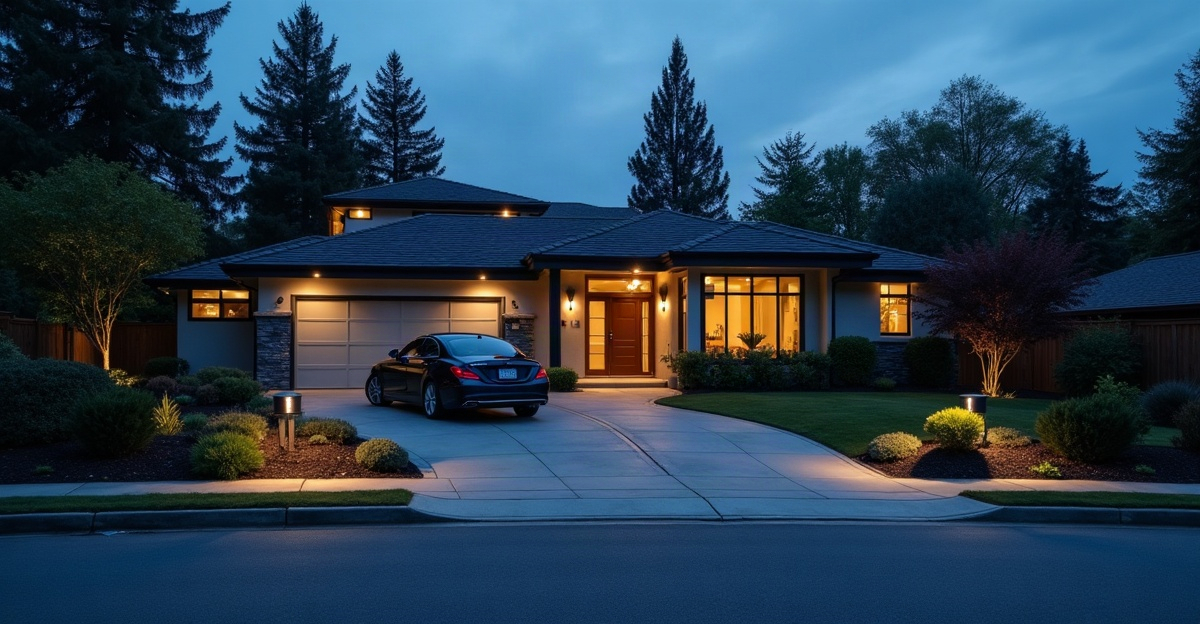
Driveway lighting improves nighttime visibility. It defines turns, slopes, entrances, walkways, and parking areas without flooding the property with brightness. A low-profile lighting plan also creates a clean arrival experience and supports curb appeal throughout the year.
Key Takeaways
- Focus lights on curves, narrow areas, elevation changes, gates, and driveway-to-walkway transitions for clear wayfinding.
- Use selective edge markers and directed light instead of illuminating every section of pavement.
- Combine landscape lights, architectural accents, and entry lighting for a cohesive route from the street to the building.
- Reduce glare by aiming fixtures away from driver sightlines and neighboring properties while maintaining comfortable visibility.
- Choose clean wiring routes, restrained fixture placement, and quality installation to keep the system subtle by day and effective after dark.
What Makes Driveway Lighting Work Well?
The best driveway lighting helps people read the route and appreciate the property without turning the drive into a runway or cluttering the landscape during the day. Well-planned outdoor driveway lighting creates comfortable nighttime visibility, clearer wayfinding, a more usable property after dark, and stronger curb appeal.
A lighting plan should begin with the actual approach to the property. We consider the driveway’s length, width, curves, slopes, narrow points, and connection from the street to the home, building, or parking area. Gates, address monuments, mailboxes, retaining walls, walkways, planting beds, mature trees, and stonework all influence where light belongs.
Vehicle and pedestrian traffic matter just as much. A driveway may need clear visual guidance at a turn, a driveway-to-walkway transition, or a separate parking area. Nearby homes also deserve consideration, since comfortable lighting should limit unnecessary spill beyond the property.
The daytime view matters too. Fixtures, wiring, and landscape elements should feel clean and low-profile in sunlight. A short suburban driveway in Bentonville or Rogers needs a different approach than a long rural drive near Gravette or Gentry, a gated property in Bella Vista, or a commercial entrance in Fayetteville, Springdale, Neosho, or Joplin.
Thoughtful driveway lighting ideas bring the entire arrival sequence together. Rather than placing fixtures everywhere, we create a clear route and add visual interest where it supports the property’s architecture and landscape.
Driveway Lighting Ideas for Different Property Layouts
Long and curved driveways benefit from selective edge definition. Low-profile markers can clarify a curve, narrow point, transition, or property entrance without lining every inch of pavement. The goal is to help drivers understand the route naturally, especially where the driveway changes direction or disappears into the landscape.
Gated entries and address features often deserve focused illumination. A softly lit gate, monument sign, address stone, mailbox area, or entrance planting bed makes the approach easier to identify after dark. The lighting should define the entry experience without overpowering the gate or address feature.
Slopes, turns, bridge-like crossings, and driveway-to-walkway connections deserve intentional attention. These are the places where route guidance matters most. Parking and turnaround areas need a different lighting balance than the driveway itself. Broad, directed illumination can support usability there while reducing glare in drivers’ direct sightlines.
For homes, we connect the street, driveway, landscaping, and front-door arrival in one polished sequence. For commercial properties, the focus shifts to a clear approach from the street to the building or parking area, with a clean and professional nighttime appearance.
Driveway LED lights can work well within this approach, but fixture selection should follow the layout and desired result. Lighting should serve visibility and wayfinding near turns, elevation changes, gates, walkways, and parking areas rather than functioning as decoration alone.
How Driveway Landscape Lights, Accent Lighting, and Entry Lighting Work Together
Different lighting layers create a more complete and natural result. Each has a distinct job.
How Each Lighting Layer Supports the Approach
Driveway landscape lights support edge definition, planting beds, and visual continuity around the approach. They can softly define ornamental grasses, boulders, trees, stonework, and entrance landscaping without making the driveway feel overlit.
Architectural accent lighting highlights the features that give a home or business character, including stone façades, columns, walls, mature trees, and focal points. Uplighting is primarily an accent layer. It creates depth and visual interest, but it should not serve as the main navigation source.
Entry lighting supports the transition from the driveway to the front door, gate, or primary building entrance. This layer ties the approach to the building exterior and gives the arrival sequence a more finished feel. Our architectural lighting services can coordinate these elements with the structure’s materials and defining details.
Where elevated structures or trees allow it, downward-directed light can provide broad, gentle illumination with fewer visible fixtures. This approach can feel particularly natural around walkways, entry zones, and established landscaping.
Permanent lighting adds another layer of flexibility. Low-profile permanent lighting can bring seasonal color and celebratory options to rooflines or architectural edges, while driveway and landscape lighting continue handling daily visibility and curb appeal. These systems complement each other, but they are not interchangeable. For more detail on the practical side, see how permanent lights get power.
How to Avoid Glare, Overlighting, and Common Driveway Lighting Mistakes
More brightness does not automatically create better visibility. Directed, comfortable illumination usually produces a more polished result than excessive output. Glare can make it harder for drivers and pedestrians to see comfortably, affect neighboring homes, and distract from the property’s appearance.
We aim fixtures away from direct driver sightlines and, where possible, away from neighboring properties. Thoughtful spacing and restraint create visual rhythm without making the driveway feel crowded.
Common mistakes often begin with treating driveway lighting as decoration only. A plan that overlooks turns, slopes, gates, and transitions may look attractive from one angle while offering little practical guidance. Placing fixtures too close together or selecting overly bright fixtures can also create harsh contrast.
Accent lighting should not be the only source of route guidance. A beautifully illuminated tree or stone wall adds depth, but it does not necessarily clarify where a vehicle or pedestrian should travel. It is also important to connect the driveway to the entrance landscaping and building rather than lighting only the pavement.
Adding fixtures one at a time without a coordinated plan can create uneven results. Visible wiring, crowded hardware, and a layout that ignores the daytime view can take away from an otherwise attractive property. Every driveway has different dimensions, traffic patterns, landscaping, and neighboring conditions, so a repeated layout rarely delivers the strongest outcome.
Why the Daytime Appearance and Professional Design Matter
Quality driveway lighting should look intentional in daylight and inviting after dark. Fixtures should blend with landscaping and architectural materials instead of creating a hardware-heavy appearance. Clean routing helps keep wiring visually concealed, while restrained placement allows planting beds, stonework, and the driveway itself to remain the visual focus.
A cohesive plan considers the full property view. We look at what drivers see from the street, what guests see as they arrive, where pedestrians transition to the entry, and how the home or business appears from key vantage points.
Professional lighting design can be especially valuable for long rural driveways, curved approaches, slopes, gated entries, separate parking areas, commercial properties, and established landscaping with valuable focal points. It also helps when low-profile hardware, quality workmanship, coordinated design, ease of control, and one provider from planning through installation and ongoing service are priorities.
Our landscape lighting services can shape a custom approach around the property’s layout, traffic patterns, landscaping, neighboring homes, and desired appearance. We can also show what different lighting layers look like in completed projects through our lighting gallery and explain what to expect through our process.
A well-planned driveway lighting system should feel natural in the landscape, useful after dark, and polished in the daytime. If you would like help creating a custom plan for your home or business, explore our gallery or request a lighting assessment.
Frequently Asked Questions About Outdoor Driveway Lighting
What Type of Lights Are Best for a Driveway?
The best choice depends on the driveway layout and the property’s goals. Edge-definition fixtures help clarify the route, driveway landscape lights support planting beds and transitions, accent lighting adds depth around features, and entry lighting connects the driveway to the front door, gate, or building entrance. Most polished projects use several layers in a coordinated plan.
How Can We Light a Long or Curved Driveway Without Making It Too Bright?
Use selective, low-profile markers at turns, transitions, narrow points, and key edges. Pair these with directed lighting and thoughtful spacing rather than placing fixtures continuously along the pavement. This keeps the route readable while maintaining a calm, refined appearance.
Where Should Driveway Landscape Lights Be Placed?
Focus on entrance landscaping, planting beds, trees, boulders, stonework, and key transitions. There is no need to light every available area. A few well-positioned fixtures can create stronger definition than a crowded layout.
Are Driveway LED Lights a Good Choice for Outdoor Use?
Driveway LED lights can be part of a custom outdoor lighting system. The right choice depends on fixture placement, desired brightness, visual style, and the role each fixture serves within the larger plan.
How Do We Keep Outdoor Driveway Lighting From Looking Cluttered During the Day?
Choose restrained fixture placement, coordinate finishes with the landscape and architecture, and use clean routing that keeps wiring visually concealed. The goal is a low-profile system that supports the property without competing with it.
Can Driveway Lighting and Permanent Holiday Lighting Work Together?
Yes. Permanent holiday lighting can add seasonal or celebratory color, while driveway lighting remains focused on daily navigation, visibility, and curb appeal.
When Should We Hire a Professional to Design Driveway Lighting?
Professional guidance is worthwhile for long or curved drives, slopes, gates, parking areas, complex traffic patterns, established landscaping, and properties that need a clean, polished, year-round result. For a conversation about a residential or commercial project, request a lighting assessment.