
Front Yard Lighting Ideas for Walkways, Trees, and Entryways
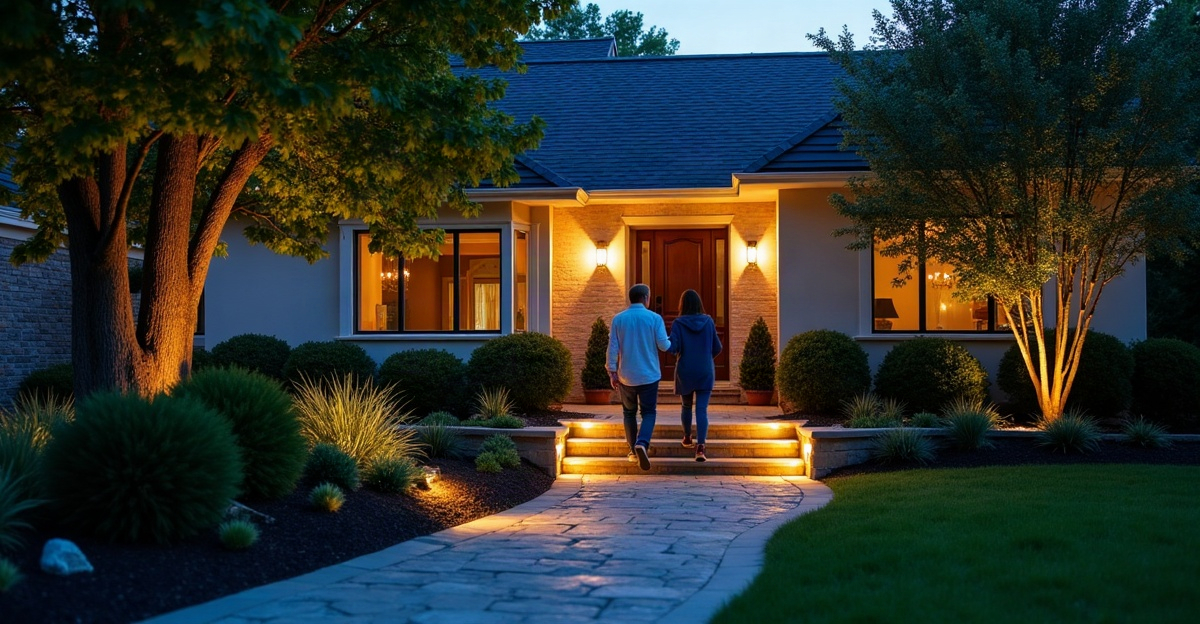
Front yard lighting works best when we create a clear route from the driveway or sidewalk to the front door. We add depth with trees, planting beds, and architectural details. A layered plan combines low-profile walkway fixtures, focused tree lighting, and entry illumination. This approach improves nighttime visibility and curb appeal without overwhelming the property.
Key Takeaways
- We recommend staggered walkway lights with deliberate spacing. They guide guests without creating a runway effect or adding daytime clutter.
- Add uplighting or downlighting to specimen trees and textured landscape features. These fixtures create vertical interest and a more polished nighttime view.
- Light the full entry sequence. Include steps, landings, house numbers, nearby landscaping, and the front door.
- Keep brightness controlled and free from glare. Focused lighting delivers better results than flooding the entire front yard.
- Permanent roofline lighting adds year-round flexibility and seasonal curb appeal. However, it serves a different purpose than pathway, landscape, and entry lighting.
A Layered Front Yard Lighting Plan Creates a Welcoming, Polished Arrival
Front yard lighting should guide guests, create focal points, and help the home feel welcoming after dark rather than simply make every area brighter. The strongest front yard lighting ideas create comfortable navigation, improved nighttime visibility, visual depth, curb appeal, and a more refined arrival experience.
We approach front yard landscape lighting as a coordinated design. Each layer has a distinct job, yet the overall result should feel connected from the sidewalk or driveway through the front door.
Walkway lighting supports wayfinding along paths, driveways, and steps. Tree lighting adds vertical interest and depth through uplighting or, where the property allows, downlighting. Entryway lighting supports the entire arrival sequence, including the approach, house numbers, steps, nearby landscaping, and front-door visibility. Landscape accent lighting draws attention to planting beds, stonework, architectural details, and other focal features.
Permanent roofline or holiday lighting can also bring year-round versatility and seasonal appeal. It serves a different purpose from ground-level landscape and path lighting, though. Roofline lighting defines the home’s upper architecture, while pathway, entry, and landscape fixtures shape how guests move through and experience the property.
A premium result comes from balanced layers, controlled brightness, thoughtful focal points, and comfortable visibility. Flooding the entire yard with light can flatten the landscape and reduce the polished look. Lighting can support visibility around an entrance, driveway, walkway, or front yard, but it does not replace a complete security plan.
Walkway Lighting Ideas That Guide Guests Without a Runway Effect
The best walkway lighting ideas define a clear route without illuminating every inch of pavement. Low-profile path fixtures can guide guests from the sidewalk or driveway to the front door while preserving a clean daytime appearance.
Fixture placement should follow the path’s width, shape, surface, and surrounding plant growth. A narrow walkway often benefits from lighting on one side rather than a fixture line on both sides. This approach reduces visual clutter while still creating comfortable visibility.
Staggered placement also creates a softer, more intentional rhythm than perfectly symmetrical rows. Instead of a runway effect, the light leads the eye and supports comfortable movement. We consider where guests naturally turn, pause, or change direction as they move through the driveway-to-entry transition.
Steps and grade changes deserve extra attention. Subtle step or riser illumination can make elevation changes easier to see after dark without producing harsh glare. Lighting near the meeting point of a driveway, sidewalk, porch, or front path can further clarify where visitors should walk.
Good path lighting remains low-profile in daylight and controlled after dark. Fixtures should not shine directly into guests’ eyes or compete with the front door. Proper spacing also leaves room for mature landscaping, so shrubs and groundcover do not eventually block the light or crowd the hardware.
Tree and Landscape Lighting Ideas That Add Depth After Dark
Tree and landscape lighting give a front yard dimension that pathway fixtures alone cannot provide. A well-placed light on a specimen tree can bring height, texture, and vertical interest to the property, helping the home feel grounded within its mature landscaping.
Uplighting works especially well for trees with a distinctive canopy, branching pattern, or prominent location near the front façade. The beam should reveal the tree’s character without overpowering nearby features. Mature tree size, canopy height, root zones, and seasonal changes all influence fixture placement and beam direction.
Where a mature canopy supports it, downlighting can create a softer effect over a walkway, planting bed, or entry zone. This technique requires careful placement so the result feels natural and the light remains useful as the tree changes through the seasons.
Front yard landscape lighting can also accent textured trunks, stonework, and architectural planting beds. Grazing light across a textured surface adds depth, but restraint matters. Too many bright sources can create distracting hot spots and pull attention away from the entry.
Planting-bed accents help frame the home’s façade without relying on broad, flat illumination. A few carefully chosen focal points often look more polished than lighting every tree, bed, and shrub. We recommend prioritizing specimen trees, visible architecture, textured materials, and focal planting beds that add character after dark.
Plant growth changes every lighting design over time. Branches expand, shrubs fill in, and seasonal plantings shift the visual balance. A thoughtful plan accounts for those changes so controlled brightness and clean sightlines last beyond the first season.
Entryway Lighting Ideas for a More Comfortable Arrival
Entryway lighting involves far more than a porch fixture. It should support the full approach, from the driveway or sidewalk through the steps and landing to the front door.
Door-adjacent lighting provides front-door visibility, but pathway and landscape layers make the entry feel connected to the rest of the yard. The goal is a welcoming arrival, not a single bright pool of light around the porch.
House numbers should remain readable after dark without creating glare at the entry. A nearby, shielded source often works better than a bright fixture pointed directly at the numbers. Subtle lighting near steps, landings, and elevation changes also supports comfortable movement through the final part of the approach.
Small landscape details can strengthen entryway lighting. An accent on a focal planting bed, stone column, textured wall, or architectural detail can frame the front door and add curb appeal. These features should complement the door and porch lighting rather than compete with them.
Architecture influences every decision. Brick façades, stone entries, covered porches, and contemporary exteriors each reflect light differently and call for different fixture locations. A balanced design keeps the entry visible while allowing the home’s materials and form to remain part of the nighttime view.
How to Combine Walkways, Trees, Entryways, and Permanent Lighting
A cohesive plan follows the order people experience the property: driveway or sidewalk approach, walkway, steps, entry landscaping, house numbers, and front door. We begin by considering how the household and its guests use the front yard after dark, then place light around the route, focal features, and arrival point.
For example, low-profile path lights may guide guests along the walkway while a specimen tree or planting-bed accent adds depth near the façade. Subtle step lighting can clarify elevation changes, and door-adjacent lighting can finish the arrival with clear front-door visibility. Each element has a role, so no single fixture needs to carry the whole design.
Daytime appearance matters as much as nighttime performance. Fixture selection, placement, wire routing, landscaping, and architectural details all shape the finished look. Quality workmanship helps the property retain a clean, polished exterior without making claims that equipment disappears completely.
Permanent roofline lighting and holiday lighting can complement this ground-level plan. It offers year-round flexibility for homeowners who want a coordinated, low-profile way to highlight rooflines for holidays, events, or everyday curb appeal. Still, it does not replace walkway, entryway, or landscape lighting. For a clearer look at installation planning, see how permanent lights get power.
The right design depends on the home’s architecture and exterior materials, walkway width and surface, driveway approach, steps, grade changes, mature tree canopies, root zones, and seasonal plant growth. Electrical access, household routines, and year-round versus seasonal lighting goals also matter. Our lighting design process considers these details before installation begins.
Common Front Yard Lighting Mistakes That Can Undercut Curb Appeal
Overlighting is one of the most common problems in front yard lighting. More brightness does not automatically improve visibility or curb appeal. Excessive output can flatten the landscape, overpower architectural details, and make a home feel less inviting.
Harsh glare creates another issue. Path fixtures should guide the route without placing a bright source directly in a guest’s line of sight. Entry fixtures also need control, especially near glass doors, reflective stone, and light-colored siding.
Path lights placed too closely or in rigid symmetrical rows can create the runway effect. Restrained spacing and staggered placement usually produce a more natural, intentional result.
Ignoring mature landscaping can affect the long-term appearance of front yard landscape lighting. Plants may block fixtures, redirect light, or make hardware stand out over time. Planning around future growth helps preserve a clean daytime appearance.
Outdoor lighting types are not interchangeable. Walkway lighting guides movement. Tree uplighting and downlighting create depth. Entryway lighting clarifies the arrival. Landscape accents reveal focal features. Permanent roofline lighting and holiday lighting serve a separate architectural and seasonal role.
A porch fixture alone rarely handles every entry need. The approach, steps, house numbers, front-door visibility, and nearby landscape features all deserve consideration. Mismatched fixtures, inconsistent lighting effects, and visible daytime clutter can also weaken an otherwise attractive exterior.
When to Consider a Custom Lighting Plan
A custom lighting consultation can be useful for properties with multiple pathways, mature trees, varied elevations, a long driveway approach, visible architectural features, outdoor entertaining areas, or seasonal lighting goals. It can also help when keeping the daytime appearance clean is a primary concern.
Custom design is not necessary for every home. The right approach depends on the property, its lighting goals, and how the front yard functions after dark. A thoughtful consultation can identify where walkway lighting ideas, entryway lighting, front yard landscape lighting, and permanent lighting will provide the most year-round lighting value.
Homeowners across Northwest Arkansas, including Bentonville, Centerton, Rogers, Springdale, Fayetteville, Gravette, Bella Vista, Pea Ridge, Gentry, and Siloam Springs, as well as nearby Missouri communities such as Neosho and Joplin, often want curb appeal and quality workmanship without a cluttered appearance. Our lighting gallery shows how layered designs can create a polished exterior after dark.
A well-designed front yard lighting plan can make your home feel more welcoming, easier to navigate, and more polished after dark. If you would like help identifying the right lighting layers for your property, explore our gallery or request a custom lighting consultation.